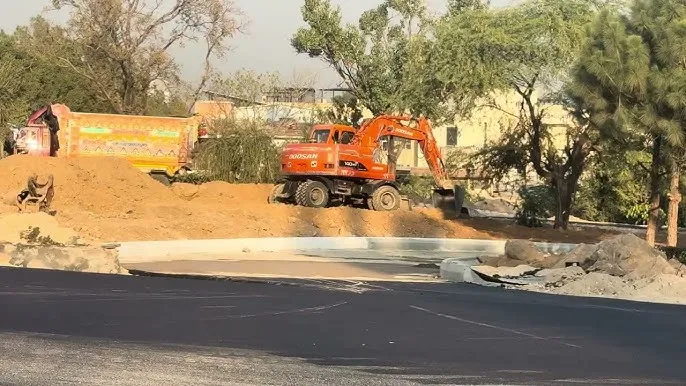
Approved by Chief Minister Maryam Nawaz, the project carries an estimated cost of around Rs1.8 billion (with some reports citing Rs1.63 billion) and is being handled by the Traffic Engineering and Transport Planning Agency (TEPA) under the Lahore Development Authority (LDA). Construction has started, with excavation work underway after the relocation of trees and removal of old water features like ponds and fountains.
The facility will offer space for 256 cars and 510 motorcycles across basement levels. Officials say it will cut down on illegal roadside parking, improve traffic movement, and benefit commuters, students from nearby Government College University and Punjab University, court visitors, and local businesses. They point to the model used at Neela Gumbad as proof it can work without major harm to the surface.
Concerns from Conservationists and Public
The move has drawn strong criticism. Nasir Bagh, also known historically as Gol Bagh or Band Stand Garden, dates back to the British era and serves as a key public green space in central Lahore. It has hosted political rallies, student gatherings, and family outings for decades, acting as a vital spot for recreation and cultural memory amid growing urban pressure.
In late 2025, authorities transplanted 123 mature trees—including neem, peepal, bohar, sheesham, and others—to make way for the work. Officials, including Environment Minister Marriyum Aurangzeb, stressed that no trees were cut and that relocation was done professionally, with plans to add new saplings later.
Yet environmental groups, including the Lahore Conservation Society, Human Rights Commission of Pakistan (HRCP), and activists like Dr. Ajaz Anwar and Imrana Tiwana, argue the project harms one of Lahore’s few remaining green lungs. They highlight risks to tree survival after relocation, loss of ecological value in a polluted city, and the need for better alternatives like public transport improvements instead of sacrificing parks.
Protests took place in December 2025, with civil society demanding the project shift elsewhere. Petitions reached the Lahore High Court, which in early 2026 issued orders banning any tree or branch cutting without PHA approval, sought site reports on restoration, and continued hearings (next scheduled around mid-January 2026). Some reports note work paused temporarily due to these legal challenges.
Also Read: Punjab Rolls Out Green Property Certificate to Secure Land Ownership
The debate reflects broader tensions in Lahore between tackling traffic and protecting shrinking green cover in a city facing heavy smog and environmental strain.